 Share this
 Twitter
 Myspace
 Digg
Digg Del.icio.us
 Reddit
 Slashdot
 Furl
Furl Yahoo
Yahoo Technorati
 Newsvine
 Facebook
 Export PDF
 Print
Print E-mail
 Tags
Tags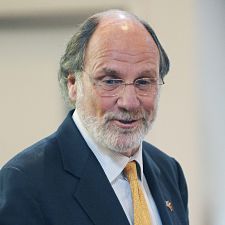 BY ERIC MODEL
NEWJERSEYNEWSROOM.COM
JOURNEYS INTO NEW JERSEY
If I asked you to name New Jersey's governor you likely could come up with the answer.
For better or for worse, Governor Chris Christie is a recognizable name. Whether it's the economy he inherited, his political style, or just the nature of political discourse these days and especially here in New Jersey, the governor has made a name for himself.
But if I asked you to name any other governors from New Jersey, how many could you name?
Probably more than you think.
There have been 55 official governors of New Jersey, with several others acting as governor for a time.
Granted you might not recall the first names, but quite a few names would be recognizable nonetheless.Some from recent times are probably most recallable — names like Jon Corzine, Christine Todd Whitman and James Florio.
Arguably the most notorious former governor of New Jersey is James McGreevey. He served as the 52nd governor of New Jersey from Jan. 15, 2002 until Nov. 15, 2004 when he left office three months after admitting to having an affair with a male employee. He is the first and only openly gay governor in the history of the United States.
There is Richard Codey who is most renowned for the circumstances in which he became governor. Codey served as the 53rd governor of the state by virtue of his status as President of the New Jersey Senate from the resignation of McGreevey on Nov. 15, 2004 until the inauguration of Gov. Corzine on Jan. 17, 2006. As there was no lieutenant governor at the time (the office came into being beginning in 2010), he again assumed the role of acting governor from April 12, 2007 to May 7, 2007, when Gov. Corzine was involved in a serious automobile accident and was hospitalized in critical condition.
Similarly, following the resignation of Christine Todd Whitman in 2001 to become EPA Administrator, Donald DiFrancesco assumed the acting governor's post.
Growing up, the some names were automatically recognizable to me from the news — the likes of Thomas Kean, William Cahill and Richard Hughes. The latter made a name not just as governor but also as a jurist and like Tom Kean as one who was able to govern with integrity and maintain a good name during and after office.
Robert Meyner was also one who managed to leave office with his reputation intact — no small feat given the sport of politics in this state. As our 44th governor, his two terms from 1954 to 1962 were characterized by strong support for state education and a general restructuring of the government.
Other former governors are familiar because their names have become embedded in our daily lives in ways that we almost take for granted. Names such as Stokes State Forest (Edward Capser Stokes, 32nd governor from 1905-1908), Livingston (William Livingston, first governor of New Jersey and signer of the U.S. Constitution), and Paterson (William Paterson, second governor, signer of the U.S. Constitution, and Justice of the U.S. Supreme Court).
There's also our governor who became president — Woodrow Wilson.
George B. McClellan, 24th governor of New Jersey was the 1864 Democratic nominee for President of the United States. This is the McClellan best known as a major general during the Civil War whose leadership skills during battles were questioned by President Abraham Lincoln, who eventually removed him from command, first as general-in-chief, then from the Army of the Potomac.
The aforementioned Robert Meyner (July 3, 1908- May 27, 1990) also ran for President in 1960 of Phillipsburg. He served as the 44th Governor from 1954 to 1962. At the 1960 Democratic Convention, Meyner received 43 votes for president, finishing fifth behind John F. Kennedy (806 votes), Lyndon Johnson (409 votes), Stuart Symington (86 votes) and Adlai Stevenson (79.5 votes) and just ahead of Hubert Humphrey who received 41 votes.
A number of Governors also went on to Washington to serve Presidents there. For example, Charles Edison (August 3, 1890-July 31, 1969), a son of Thomas Edison, businessman, Assistant and 42nd governor of New Jersey also served as U.S. Secretary of the Navy. Walter Evans Edge, 36th governor of New Jersey was also 46th U.S. Secretary of the Navy. John W. Griggs, 29th governor of New Jersey was 44th U.S. Attorney General.
Whitman, 50th governor 1994 to 2001, and by the way New Jersey's first, and to date, only female governor went on to Washington to serve as administrator of the Environmental Protection Agency in the administration of President George W. Bush from 2001 to 2003.
William Nelson Runyon (March 5, 1871-Nov. 9, 1931) was a Republican who served as acting governor from 1919 to 1920. He was appointed as a Judge of the U.S. District Court in 1923, serving on the bench until 1931.
Other governors of note include Robert Driscoll of Camden County. He served as governor from 1947 to 1954 where he was a proponent for the New Jersey Turnpike and the Garden State Parkway. Driscoll, a Republican, is also famous for giving William J. Brennan, a Democrat, his first judicial appointment in 1949. It was a seat on the Superior Court. In 1951, Driscoll promoted Brennan to the state Supreme Court, where he served until appointed to the U.S. Supreme Court by President Eisenhower in 1956.
One name not be recognizable to most New Jeresyans is that of Leon Rutherford Taylor (October 26, 1883-April 1, 1924). He was acting governor from Oct. 28, 1913 to Jan. 20, 1914. Taylor took office upon the resignation of James Fairman Fielder, who had stepped down to create a vacancy in the governorship and avoid constitutional limits on succeeding himself.
Finally an interesting personality was that of Joel Parker. He was nominated for governor by the Democratic Party in 1862, and ran as a "War Democrat" who supported a military solution to the Civil War rather than accommodation of the Confederacy. He defeated Marcus L. Ward by the largest margin in State history up to that time.
Although staunchly in favor of the war, Parker was also highly critical of the Lincoln Administration's 's actions with respect to curtailing civil liberties in the name of the war effort, castigating Lincoln for suspending habeas corpus and for what Parker considered the unconstitutional nature of the Emancipation Proclamation.


Never Forget
http://www.wolfenotes.com/2010/09/never-forget/