
 Share this
 Twitter
 Myspace
 Digg
Digg Del.icio.us
 Reddit
 Slashdot
 Furl
Furl Yahoo
Yahoo Technorati
 Newsvine
 Facebook
 Export PDF
 Print
Print E-mail
 Tags
Tags Article Index
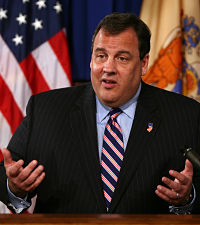 BY SUSIE WILSON
NEWJERSEYNEWSROOM.COM
SEX MATTERS
Dear Governor Christie,
You recently announced new testing recommendations for New Jersey public high school students. “We need to make sure that the students we send from New Jersey high schools either into the workforce or into higher education are prepared on that first day to sit in that college classroom, or to perform the job that a business has asked them to perform,” you said.
This sounds like an eminently worthwhile goal for a governor who is in reality the educator-in-chief of the Garden State.
Your proposal—the work of the Department of Education’s College and Career Readiness Task Force—recommends tests in language arts, math, science and social studies for ninth through eleventh graders to assure their competency in these areas.
Something is missing from this list: a health education test. Caring for our personal health is a lifelong skill and requires basic knowledge of many different topics: nutrition, drugs, diseases, alcohol, tobacco, exercise and pregnancy, to mention only a few. The aim of health education is to prevent problems that can affect a person’s life long after high school—not to mention the costs to our nation’s health care and medical systems.
By now, it’s widely known that we face a growing obesity epidemic in the United States, and major health campaigns have been launched to combat the problem. I’m not claiming that a health education test for seniors will solve the obesity problem, but what constitutes a sound diet and strategies for controlling weight gain can be part of a health class curriculum.
Yet health remains on the periphery of the high school curriculum, and tests in the subject are not required for a diploma. This lack of respect for the topic leads many students to become apathetic about studying it. Instead, they focus more on subjects that require testing. Students’ approach might change if they knew that a health education test awaits them in order to graduate.
They need to be as health literate as they are math literate. If we truly believe in the concept of prevention, then students need to understand the real human and societal cost of health issues, from sexually transmitted diseases to drug and alcohol abuse. One just needs to review some of our national health statistics to understand the magnitude of the problem .
I’m convinced that a national standardized health education test for high school students could improve lifelong health outcomes and lower our national medical costs by preventing the onset of health problems rather than having to treat them once they are diagnosed. Why not let New Jersey become a national leader by introducing a statewide test?
Of course, human sexuality questions in the health education test may compromise its development from the start. Sexuality education still draws the lightning, and including questions about it in a required student test might be too much for some parents, school superintendents and politicians to accept and defend.
Yet we must not shy away from the topic. New Jersey was one of the first states to require family life and sex education as part of the elementary and secondary school curricula in the 1980s. The policy had the support of two governors: Brendan Byrne and Tom Kean. In subsequent years, we received a great deal of praise for our leadership in including the topic within health education. To the best of my knowledge, no one lost an election to a school board or the legislature for supporting the policy.
The New Jersey Department of Education (DOE) developed statewide standards for human sexuality and family life education that exist to this day. These standards stress the importance of abstinence from sex through high school as well as instruction on contraception.

