
 Share this
 Twitter
 Myspace
 Digg
Digg Del.icio.us
 Reddit
 Slashdot
 Furl
Furl Yahoo
Yahoo Technorati
 Newsvine
 Facebook
 Export PDF
 Print
Print E-mail
 Tags
Tags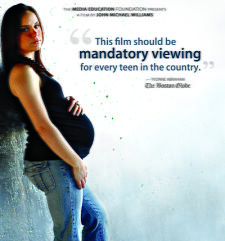 BY SUSIE WILSON
NEWJERSEYNEWSROOM.COM
SEX MATTERS
We're told that we have notoriously short memories. So I wonder, do you remember the infamous "Gloucester 18"? Here's a hint: Gloucester is a small town in Massachusetts that bills itself as "America's Oldest Seaport." Doesn't ring a bell? Then how about the words "pregnancy pact"?
"Bingo," I hear you say, "that's the place where all those girls in one high school made a pact and got pregnant on purpose, right?"
No, you would be wrong — not because you aren't up on your facts, but because until very recently no one took the time to get to the bottom of the story.
Kristen Grieco, a former reporter from the Gloucester Daily Times who first broke the story, has stepped up to clarify the charge against the girls and the town by producing a 67-minute documentary film, The Gloucester 18. It is moving, compelling film that reveals the real story about the supposed "pact" as well as more profound truths about teen pregnancy.
Grieco, who quit her job to produce the film, was investigating a suspicious spike in the teen pregnancy rate at the local high school in March 2008. She also had heard rumors that "a clique [of girls had formed] with the express purpose of getting pregnant." Dr. Joseph Sullivan, the school's principal, pretty much started the ball rolling by saying that some girls purposely got pregnant to explain the spike in the numbers.
The first truth that the film reveals is that there was no pregnancy pact.Teens and sex!!! Always an incendiary mix to delight and attract the media, which can play both the role of voyeur and disapproving adult. After Grieco's story broke, the national press descended on the small, economically strapped fishing village to sensationalize what actually occurred. After all, 16, 17, or 18 girls in one high school getting pregnant on purpose — what could be juicier for the mainstream media?
A Time magazine reporter coined the phrase "pregnancy pact," and it drew reporters from such far away places as Brazil, England, and the Netherlands to every corner and driveway of Gloucester to report the lascivious details.
The media got the story mostly wrong. There was no pact, but there were 18 girls in the high school who were pregnant, which was somewhat above the average number for a given year.
To Grieco's credit, she decided to "hear" as much as she could about the true story behind the spate of pregnancies. She interviewed almost half the girls who had become pregnant (of the 18, six chose to have abortions), some of their parents, and the high school health educators. She quickly found a troubling truth: the number of teen pregnancies at the high school was high, but it was pretty much what it had always been.
The girls who attended Gloucester were white. Grieco expanded her research to Lowell and Springfield, Mass., to tell the stories of pregnant minority teens to see if there were any similarities and differences within the populations. The themes were very much the same. Poverty and teen pregnancy often go hand in hand, and these three towns have experienced hard times during the last decade.
The film introduces us to Kyla, Alissa, Brianne, Hallie, Tabitha, Sarah, Leslie — all of whom deliver their babies and try to adjust to their new situations as unmarried, single parents (only a few have steady live-in boyfriends). We also meet one intact family and several other single moms who are raising their teen girls alone. Not many men are in the picture, which is also an unpleasant truth about teen pregnancy.
Grieco shows us the commonalities that most, if not all, of these pregnant teens share:
The girls seem passive and unrealistic about the challenges of raising a child and staying in school. None have much self-esteem or any future goals; they seem to have drifted into having unprotected sex and rarely, if ever, used birth control. They feel that some adult, hopefully their parent or parents, will accept their babies and help raise them, and most have absolutely no sense of what it takes to raise a child in safety and dignity or the financial and psychological costs.
We learn that a high proportion of the teen moms were born to women who were teen moms themselves, and that the cycle repeats itself. Most of the girls who have a first birth in the film are pregnant with a second within a very short span of time.
The most troubling commonality is that so few of the girls had a loving, protective, and helpful family. I doubted, too, that their parents had been given much advice about sexuality and pregnancy. Some had grown up in the foster care system desperately wanting a family of their own. Many were looking for love and thought a baby would provide it.
Leslie, a minority teen girl from Lowell, is the one whose words and face lingers. Her mom gave birth to her at 15 and her brother at 16. I might characterize her as a "throwaway child" for whom no adult had ever cared. She didn't have a home and spent her time living in shelters and in the back of vans. She seemed to have a lot of unprotected sex, probably in order to secure a place to sleep at night.
Leslie also had spunk. She was more articulate than the rest of the girls in the film. She said that her pregnancy was unintentional, believing that "it couldn't happen to me," because she had been told that she had only one ovary. She rationalized her pregnancy as "perhaps the only opportunity to be a parent." Her only source of income was money earned from braiding friends' hair. Leslie, by film's end, is pregnant with her second child, still with no visible signs of adult support.
Dr. Brian Orr, the former director of the high school health clinic, and Kim, Daly, its former nurse practitioner, offered the best explanations for why so many of the girls in Gloucester became pregnant that spring. They knew that many of the high school girls were having sex, but they were not permitted to prescribe the birth control pill or distribute condoms in the health center. They crossed swords with the leaders of the local hospital that oversaw the clinic. Hospital officials publicly questioned the hospital's liability if birth control prescriptions were written in the clinic. Despite Daly's best efforts to inform officials that "being on the pill is safer [for a teen female] than giving birth," she was unable to change their minds.
Orr and Daly lost the battle and resigned. But the uproar in the community led the Gloucester School Committee to permit kids to get birth control prescriptions as long as their parents opted to enroll them in the program.
But this policy came too late for the "Gloucester 18."
Grieco has no plans for general distribution of her film. It is distributed primarily to education groups and community nonprofits through the Media Education Foundation.
I hope The Gloucester 18 will be distributed to a wider audience, since many more of us would really understand the roots of teen pregnancy. We would learn more about our responsibilities to the vulnerable teen girls who live in poverty and have little hope for the future. We'll also wise up to how the media sensationalizes teen sexuality to the detriment of those who are working to solve a serious societal problem.
Susie Wilson, former executive coordinator of the Network for Family Life Education at Rutgers University's Center for Applied and Professional Psychology (now renamed Answer), is a national leader in the fight for effective sexuality and HIV/AIDS education and for prevention of adolescent pregnancy. She can be reached at This e-mail address is being protected from spambots. You need JavaScript enabled to view it
ALSO BY SUSIE WILSON
Local boy does good: Jon Stewart in D.C.
Marian Wright Edelman and Michelle Obama: Two champions for children
Sixty years later: Aging gracefully and still enjoying sex
Wanted: A few (more) good men to teach sex ed
Christine O'Donnell and sexual politics from M to Z
New Jersey may give up its leadership on sex ed
My message in a bottle for my neighbor, the president
A frank summertime conversation about gays and lesbians
Warren Buffett's wise words about women
Oh, Bristol and Levi are getting married, but should we really care?
A presidential lesson on finding common ground on abortion
Graeme McDowell’s victory produced a lingering image
The ‘Girl with the Dragon Tattoo' hits close to home
Tipper and Al: (No longer) perfect together
The Pill that changed the world turns 50
The plight of Faith Kramer, and teaching honestly about sex
‘Don't ask, don't tell' from a different angle
Yeardley Love and George Huguely: A lesson in what love is not
Kudos for another Jersey Girl: Because gender matters in politics
The eternal allure of Judy Blume, a Jersey Girl
Saved by a nose: A recent book recounts a flight from genocide
A message about rape for New Jersey from a Florida highway
Pity the kids in Texas and elsewhere, too
Grandmotherly advice about sex education and grandchildren
What Regan Hofmann can tell us about HIV, AIDS ... and life
Sex and Consequences: The giant condom and the SI swimsuit issue
Oprah Winfrey's words of wisdom about sex
Taking Issue with 'Sex Ed in Washington'
America's Sexiest Man vs. Plain Jane: Sexism and the Massachusetts U.S. Senate election
Sex and the budget director: The tale of Peter Orszag
On John F. Kennedy's Profiles in Courage after N.J.'s same-sex marriage vote
Some good/bad news about sexuality as 2010 arrives
From N.J. to D.C.: How — and why — I lobbied to stop the Stupak Amendment
Two African-American teens prove ‘We Shall Overcome' applies to individual lives, too
A Thanksgiving grace for sexuality education
The Kennedy brand of theology is missing from the debate on health care reform
An open letter to Democratic New Jersey Congressman John Adler on the health care reform bill
Scary stories from far away and close to home
The First Lady Michelle Obama, and the lessons 'Double Dutch' can teach our youth
Report details the sexual health of New Jersey teens
Time for a campaign against child sexual abuse
Coming to N.J.: A ‘Top Tier' teen pregnancy prevention program
It's All about Prevention: Part II: A call for a national health education test
It's all about prevention: The purpose of sex education
Hey, New Jersey, ready to talk about sex?

